CPM in digital marketing has quietly become one of the most consequential metrics a performance marketer can master — and in 2026, its strategic weight has only increased. At its core, CPM (cost per mille) is the price an advertiser pays for every 1,000 impressions delivered. But reducing it to a line-item calculation misses what it actually controls: the cost of attention itself, at scale, across every channel where your brand needs to be seen.
The landscape that surrounds this metric has changed dramatically. Through all of it, CPM has remained the common denominator — the unit that makes display, video, social, and streaming inventory comparable on a single axis.
This guide is built for PPC specialists, B2B marketing managers, and digital marketing professionals who need more than a definition. You’ll find the calculation method, the benchmarks that actually matter heading into 2026, the strategic logic behind CPM-based buying versus click-based models, and the failure modes that cause well-funded campaigns to quietly underperform. Each section connects back to a single practical goal: using CPM not just to measure delivery, but to engineer the reach, frequency, and audience depth that every downstream tactic depends on.
The Strategic Evolution of Cost Per Mille in 2026
Every media plan eventually collapses into one question: what does it cost to put a message in front of a thousand people? That question has a name, and it has governed display buying since the first banner ad was sold.
CPM — short for cost per mille — is the price an advertiser pays for every 1,000 impressions of an ad. “Mille” is simply Latin for thousand, which is why the metric is sometimes written as cost per thousand impressions.
The terminology is inherited from print, but the function has changed completely. A decade ago, CPM was a negotiated rate on an insertion order, agreed by phone and locked for a quarter. Today it is a live auction signal, recalculated thousands of times per second across supply-side platforms, private marketplaces, and connected TV inventory. CPM in digital marketing now behaves less like a price tag and more like a market index: it tells you what attention costs in a given environment, at a given moment, for a given audience.
That index has become the reference point for how much of the buying process runs on autopilot. Programmatic ad spend efficiency reaches 43.9% in 2024, according to the Association of National Advertisers — a reminder that automated buying has real slippage built into it. Pricing pressure is equally uneven by format: news and media verticals saw a $7.93 video ad CPM in Q4 2025.
The Math of Visibility: How to Calculate CPM Accurately
The arithmetic is unglamorous, which is precisely why it gets fumbled in reporting decks.
CPM = (Total Campaign Cost ÷ Total Impressions) × 1,000
Learning how to calculate CPM correctly hinges on that final multiplication. Beginners divide spend by impressions, see a figure with four decimal places, and assume something has gone wrong. Nothing has. The raw division gives you the cost of a single impression — a number too small to be useful in planning conversations. Multiplying by 1,000 restores it to a scale humans can compare across channels, vendors, and quarters.
Work a hypothetical. A media manager allocates $5,000 to a display flight and the campaign delivers 500,000 impressions. Divide $5,000 by 500,000 and the cost of one impression is $0.01. Multiply by 1,000 and the flight’s CPM is $10. That single figure now sits alongside every other line in the plan, comparable regardless of whether the inventory was bought on a demand-side platform or direct from a publisher.
The complication is what counts as an impression. A served impression means the ad call was answered and creative was delivered. A viewable impression means a defined portion of the ad occupied the screen for a defined duration. These are not the same number, and the gap between them is where budget quietly disappears.
Run the formula twice — once against served impressions for your billing reconciliation, once against viewable impressions for your strategic read. The second figure is the honest cost of visibility.
Media planners who only track the first number are measuring delivery. Planners who track both are measuring whether delivery ever reached a human eye, which is the only version of the metric worth optimizing against.
Why CPM is the Foundation of Programmatic Efficiency
Programmatic buying is an auction system, and auction systems need a unit of account. CPM is that unit. Strip it out and real-time bidding has nothing to bid on.
Programmatic ad spend efficiency reaches 43.9% in 2024, according to the Association of National Advertisers — meaning a substantial share of every dollar committed to automated buying is consumed before it ever reaches working media.
CPM as the bidding floor. In real-time bidding, publishers set a price floor expressed as a CPM. Buyers submit bids expressed as a CPM. The exchange resolves the two in milliseconds. Every parameter a trader adjusts — audience segment, frequency cap, domain inclusion list, time of day — resolves back into a change in the effective CPM being paid. It is the language the machine speaks.
CPM as an efficiency diagnostic. When effective CPM climbs without a corresponding lift in reach or engagement, the problem is rarely the creative. It is usually supply path inefficiency: too many intermediaries between the buyer’s platform and the publisher’s inventory, each taking a fee. Tracking CPM at the placement level, not just the campaign level, exposes where those fees are accumulating. Cost per thousand advertising models are transparent by design, but only if you look at the granular data.
CPM as a scale indicator. For B2B managers, impression volume is the closest available proxy for market penetration. A niche audience of 40,000 decision-makers cannot generate meaningful click volume, but it can be saturated with impressions. CPM tells you what saturating that audience costs, which converts an abstract awareness objective into a defensible line item on a budget request.
CPM vs. CPC: Choosing the Right Model for Your Objectives
The bidding model you select determines which risk you absorb — delivery risk or engagement risk.
| Metric | Best For | Key Risk |
|---|---|---|
| CPM | Brand awareness, product launches, category entry, high-volume reach against defined audiences | Paying in full for impressions that generate no measurable interaction |
| CPC | Direct response, lead generation, retargeting, lower-funnel conversion actions | Forfeiting the passive exposure value of users who see the ad but never click |
| CPA | Mature campaigns with stable conversion data and clear attribution paths | Restricted delivery, as the platform suppresses reach to protect the cost target |
CPM buying shifts the burden of performance onto the advertiser. You pay for delivery, and whether that delivery produces anything is your problem to solve through targeting and creative. This is the correct trade when the objective is being seen by the right market — a product launch, a repositioning, an expansion into a category where the brand has no existing recognition. Nobody clicks on a brand they have never heard of, so charging the first exposure to a click-based model guarantees underdelivery.
CPC buying shifts that burden onto the platform, which only gets paid when a user acts. The efficiency looks superior on a dashboard, and for lower-funnel work it usually is. The hidden cost is the billboard effect: the large population of users who registered the ad, formed an impression, and later searched the brand directly. A click-priced campaign sees none of that value and will optimize away the placements generating it.
The practical answer is sequencing rather than selection. CPM builds the audience; CPC harvests it.
Benchmarking Success: What is a ‘Good’ CPM in 2026?
There is no universal benchmark, and anyone quoting one is selling something. CPM is a function of scarcity — how many advertisers want the same audience in the same environment at the same moment — and scarcity varies enormously by vertical, format, and season.
This is where cheap becomes expensive. A $1.50 CPM on remnant inventory looks like a victory in a spreadsheet and frequently delivers impressions to auto-refreshing pages, below-the-fold slots, and audiences with no commercial relationship to the category. A $9 CPM against verified decision-makers in a premium environment can outperform it on every downstream measure.
Factors that move your CPM rate:
- Vertical competition — finance, legal, and B2B software bid against thin, high-value audiences
- Ad format — video and rich media price above standard display banners
- Placement quality — above-the-fold and premium editorial inventory carries a clear premium
- Targeting depth — each additional layer of audience filtering shrinks supply and raises price
- Seasonality — Q4 retail demand inflates auction pricing across nearly all inventory types
- Geography and device — tier-one markets and connected TV sit at the top of the range
The Role of CPM in Multi-Channel Brand Orchestration
Frequency is the reason CPM matters beyond the media plan. The old advertising heuristic that a buyer needs roughly seven exposures before acting has survived every platform shift because the underlying psychology has not changed. Repeated exposure is not optional, and repeated exposure is purchased in impressions. A campaign priced on clicks cannot guarantee frequency; a campaign priced on impressions can engineer it deliberately.
That engineering is what turns awareness spend into a compounding asset. Top-of-funnel CPM campaigns generate the audience pools that every downstream tactic depends on: site visitors for retargeting, video viewers segmented by completion rate, engaged profiles for lookalike modeling. Without a steady impression flow at the top, the retargeting pools drain and CPC and CPA campaigns grow progressively more expensive as they compete for the same shrinking remarketing list.
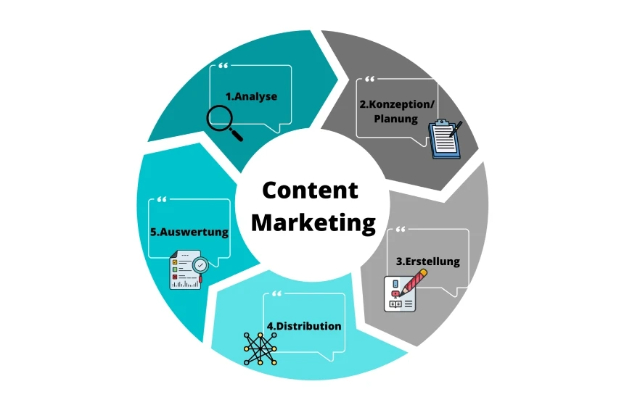
Content marketing is the disciplined practice of creating and distributing valuable, consistent assets that earn attention by solving an audience’s problems. — Clickworkerr
Paid distribution and earned attention operate on the same logic. A well-built asset that nobody encounters is not marketing; CPM is what guarantees the encounter.
For B2B, the channel mix has consolidated around this thinking. LinkedIn sells access to firmographically precise audiences at a premium rate that only makes sense when evaluated on reach against decision-makers rather than immediate click volume. TikTok operates at the opposite end, delivering vast impression volume at low cost that builds category familiarity long before a buying committee forms.
CPM in Digital Marketing: Common Pitfalls That Make Your CPM Misleading
A falling CPM is not automatically good news. It is often the first symptom of a campaign quietly degrading, because the cheapest impressions in any auction are cheap for a reason.
The core problem is that an impression is a technical event, not a human one. An ad server records a delivery when creative loads. It does not record whether the unit rendered above the fold, whether the user scrolled past it in under a second, or whether a browser was involved at all. Optimizing toward a lower cost per mille without interrogating impression quality systematically pushes budget toward the worst inventory on the exchange.
Three failure modes to watch for:
- Below-the-fold delivery. Ads served into slots the user never scrolls to are billed identically to prime placements. Campaigns weighted toward long-form pages can accumulate large volumes of served-but-unseen impressions.
- Ad blocker distortion. Blocked inventory skews the composition of your reachable audience toward less ad-averse segments, which quietly changes who your reported impressions actually represent.
- Invalid and bot traffic. Automated traffic inflates impression counts, which mechanically depresses reported CPM while contributing nothing to revenue. A campaign that looks unusually efficient on cost and unusually poor on conversion is exhibiting the classic signature.
Shift your primary KPI to vCPM — viewable cost per mille — which prices only impressions that met the viewability standard. The number will be higher than your served CPM, and that is the point: it is the first figure in the report that describes real human exposure rather than server activity.
The Bottom Line: Key Takeaways for Marketing Professionals
Strip the strategy back to its operating principles and five points carry the weight.
- CPM measures the cost of 1,000 impressions and remains the primary currency of brand reach. It prices visibility itself — the input every downstream funnel stage depends on, from awareness through conversion.
- Knowing how to calculate CPM is non-negotiable for any media plan. Apply the formula — (total campaign cost ÷ total impressions) × 1,000 — and you get a figure that’s directly comparable across platforms, publishers, and quarters. Run it twice: once against served impressions for billing reconciliation, once against viewable impressions for your honest strategic read.
- Programmatic performance is inseparable from CPM discipline. Bid floors, supply path fees, and effective rates all resolve into this one number. Placement-level monitoring is where waste becomes visible — and where efficiency gains are actually recoverable.
- Video inventory in premium editorial environments commands a real premium in 2026. Treat that cost as the price of context and verified attention, not an inefficiency to engineer away. A $9 CPM against qualified decision-makers routinely outperforms a $1.50 remnant rate on every downstream measure.
- Always read CPM alongside viewability. Served impressions describe server activity; viewable impressions describe human exposure. Only the second figure is worth optimizing against.
The through-line connecting all five is that CPM is a decision-making instrument, not a reporting obligation. Marketers who treat it as a bill to minimize will consistently buy the cheapest and least valuable inventory available. Marketers who treat it as a price signal — one that reveals where their audience is scarce, where competition is fierce, and where attention is genuinely obtainable — gain a defensible basis for arguing top-of-funnel budgets to stakeholders who want conversion math. Reach has a price. Knowing that price precisely is what separates disciplined media planning from media guessing.