Defining Content Marketing for the 2026 Advertising Landscape
No bidding strategy can succeed with weak messaging. Content marketing is the disciplined practice of creating and distributing valuable, consistent assets that earn attention by solving an audience’s problems — built to be reused across organic search, social platforms, and paid campaigns rather than consumed once and discarded.
That reframing matters for anyone running paid media in 2026, because the relevance and trust signals that platform algorithms now reward are produced by content, not by bid adjustments.
The Five C’s Framework: A Holistic Strategy for PPC Professionals
Word count, publishing cadence, and keyword density are production metrics. They tell you a piece exists, not whether it will do anything commercially. The Five C’s provide paid specialists with a method to evaluate an asset before investing in traffic — each C relies on the previous one, so any upstream break results in wasted expenditure downstream.
Contex
Where is this person in the buying journey, and what did they just do? Someone who clicked a search ad on a high-intent commercial query needs a different page than someone who stopped scrolling on a TikTok hook. Matching the asset to the moment is the single highest-leverage decision in the framework, and the one most often skipped.
Content
The substance itself — the demonstration, the data, the walkthrough, the comparison. Format follows context: use video where attention spans are short and visual, and structured text where the reader is evaluating and comparing. Quality here means specificity, not length.
Connection
Every asset should have a visible, honest line back to what the business sells. If a reader finishes the piece and cannot articulate why this company was the one qualified to write it, the connection is missing and the traffic is a donation.
Community
Comments, replies, sales objections, support tickets, and search queries form a feedback loop that tells you which themes actually resonate. Teams that read that loop stop guessing at topics.
Conversion
The measurable outcome — a lead, a subscription, a booked call, a qualified retargeting cookie. Defining the conversion before production, not after, is what turns a content calendar into a performance channel.
Common Types of Content for Multi-Channel Orchestration
Different assets carry different jobs across the funnel, and a working mix usually needs one of each rather than ten of the easiest. The useful way to categorize content is by the commercial function it performs and the channel it feeds.
- Educational blogs and guides. The backbone of organic acquisition and the natural landing destination for search campaigns. Long-form explainers capture informational queries, build topical authority over time, and give sales a library to send prospects who want detail. They also double as the raw material every other format is cut from.
- Video content. The dominant format on TikTok and YouTube, and increasingly the deciding factor in whether a social ad converts. Short demonstrations, objection-handling clips, and founder explainers earn the watch time platforms reward, and the best performers can be promoted directly as paid creative with minimal editing.
- White papers and case studies. The workhorses of B2B lead generation. A named customer story with specific before-and-after detail does work no ad copy can do: it proves the outcome is achievable for someone with the reader’s constraints. Gated research pieces remain one of the cleanest ways to build a qualified list for retargeting and outbound.
- Social content. Short posts, threads, and replies on X and Instagram that establish personality and keep the brand in circulation between campaigns. This is where community forms, where objections surface in public, and where the audience tells you which themes deserve a full asset behind them.
Orchestration ensures these formats reference and support each other, rather than existing in separate calendars managed by different individuals.
Building Your Foundation with Content Pillars
Content pillars are the three to five themes a brand commits to owning — the subjects it will still be publishing about in two years, chosen because they sit where audience demand and genuine expertise overlap.
The expertise pillar. Built on what the team knows better than competitors do — methodology, technical depth, hard-won process detail. This pillar carries the authority signals that search engines and skeptical buyers both look for, and it is the hardest for a competitor to copy.
The problem pillar. Organized around the pain points prospects describe in their own words before they know a solution category exists. These themes feed top-of-funnel search and social, and they produce the retargeting audiences that paid campaigns convert later.
The proof pillar. Customer outcomes, teardowns, benchmarks, and worked examples. This is the material sales reaches for and the material that makes a paid ad believable to someone who has never heard of the brand.
For a small business, this is the difference between a calendar and a scramble. Pillars also prevent content drift — the slow slide into publishing whatever is topical until the archive no longer says anything coherent about what the company does. Pick pillars you can defend for years, not topics you can fill for a quarter.
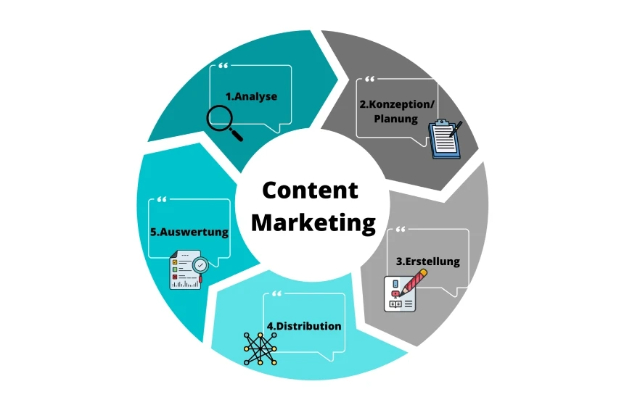
A Simple 5-Step Process for Creating a Content Marketing Strategy
A content marketing strategy 2026 buyers will respond to is built on evidence from the channels you already run, not on a brainstorm. This sequence is repeatable quarterly.
Step 1: Deep Customer Research and the SME Interview
Keyword tools tell you what people type. They do not tell you why a deal stalled in procurement, or which objection your sales team hears on every third call. That intelligence lives with your Subject Matter Experts, and the only reliable way to extract it is a structured Content Interview.
Book 30 to 45 minutes with the person closest to the problem — a senior account manager, a technical lead, the founder. Record it. Transcribe it. Treat the transcript as your primary source, not as inspiration for something you’ll later rewrite from search results.
Three questions that consistently produce unique material:
- “What does a customer believe when they come to us that turns out to be wrong?” This surfaces contrarian angles no competitor has published.
- “Walk me through the last time this went badly. What was the actual cost?” Specific failure states beat abstract pain points every time.
- “What do you check first that nobody outside this team would think to check?” This is the operational detail that signals genuine experience.
keep the specificity, remove the jargon. Send the draft back to the SME for a factual review before it moves forward.
Step 2: SERP Analysis and Intent Mapping
Before a single word is drafted, open the search results and read what already ranks. Not skim — read. The top three to five results are a direct statement of what the search engine currently believes satisfies that query, and your brief should be built against that reality rather than against an internal opinion.
Work through it in order. Identify the dominant format: are the winners long-form guides, comparison tables, listicles, or product pages? Matching format is table stakes; deviating from it requires a deliberate reason. Next, map the sub-topics each result covers and note the overlap — that overlap is the baseline expectation your piece must meet before it can do anything interesting.
Then run the gap analysis:
- Which claims are asserted with no source, pricing, or worked example behind them?,
- Where does coverage stop short — a step described but never demonstrated?,
- What is dated? Old screenshots, deprecated platform features, superseded guidance.,
- Which questions appear in People Also Ask that no ranking page answers directly?, and Is there a segment — company size, industry, budget tier — nobody has written for?
The gaps become your outline. Everything else is parity.
Step 3: High-Quality Production and Video Integration
Production is where most plans quietly fail. A strong brief gets handed to a writer with no access to the SME transcript, no design support, and a same-week deadline — and the output reverts to the mean.
Set non-negotiable standards instead. Every substantive claim gets a source or a first-party example. Every process gets a screenshot, a table, or a short clip showing it happening. Author bios name a real person with verifiable credentials, because experience and expertise are only persuasive when they are attributable. These are the signals that separate a page worth citing from one worth skipping.
Video deserves a line item, not an afterthought. A three-minute clip of your SME explaining the concept on camera does something text cannot: it proves a human being with working knowledge stands behind the page.
87% of marketers report a positive ROI from incorporating video into their strategy.
Shoot it during the interview you already recorded. One session produces the transcript, the video asset, and the social cutdowns — three deliverables from a single hour of an expert’s time.
Step 4: Multi-Channel Distribution and PPC Synergy
A published article is raw material, not a finished campaign. The flywheel starts when organic performance data tells you which ideas deserve paid amplification — and paid data tells you which angles deserve more organic depth.
Run it in both directions. When a piece earns unusually strong engagement or assisted conversions organically, extract its hook and test it as ad creative. When a paid headline outperforms on cold traffic, build the long-form asset around it. This is where marketing and content stop operating as separate departments.
On the paid side, the connection is mechanical. Google Ads rewards landing page relevance and usefulness, so genuine PPC optimization content — pages that actually answer the query behind the keyword you’re bidding on — lowers acquisition costs rather than simply sitting behind the click. Thin pages drag quality scores down and you pay for it on every impression.
Distribution worth budgeting for:
- Paid social creative on TikTok and X, cut from existing video
- Retargeting sequences built on mid-funnel guides
- Email to segmented lists, not the whole database
- Sales enablement — the SME interview answers objections reps face daily
- Partner and community placement where your buyers already gather
Step 5: Measuring ROI and Performance Metrics
If you cannot connect a piece of content to pipeline, you will lose the budget argument the first time finance asks. Separate the numbers that describe activity from the numbers that describe growth.
| Vanity Metrics | Growth Metrics |
|---|---|
| Pageviews | Assisted conversions by URL |
| Total keywords ranking | Rankings for commercial-intent terms |
| Social followers | Qualified leads attributed to content |
| Time on page | Sales cycle length for content-touched deals |
| Posts published per month | Cost per lead vs. paid-only baseline |
| Impressions | Revenue influenced per asset |
Track each asset against the funnel stage it was built for. Top-funnel guides should be judged on new-visitor acquisition and retargeting pool growth. Mid-funnel comparisons should be judged on demo requests. Bottom-funnel pages should be judged on close rate.
Overcoming Challenges: Personalization and Scale
Personalization in content marketing means matching the asset to the segment and the stage — showing an enterprise evaluator a security-focused case study while a solo operator sees a pricing explainer. It matters more in 2026 because platform targeting has narrowed while creative demand has expanded: campaigns now need several message variants where one used to suffice. The constraint for most teams is production capacity, not idea supply.
| Challenge | Solution | Where it happens |
|---|---|---|
| Too many segments, one message | Build message variants per pillar, not per campaign | Landing page templates with swappable proof blocks |
| Research and editing consume the week | Separate the expert’s time from the editor’s time | Recorded interviews transcribed and edited into drafts |
| Creative fatigue on paid social | Promote proven organic posts instead of net-new ads | Native platform post promotion |
| No bandwidth for consistent output | Outsource production, keep strategy in-house | Content marketing services or an in-house editor |
For small B2B firms, the fastest path to scale is founder-led repurposing. One recorded conversation with the person who knows the subject — forty minutes, unscripted — yields a transcript that an editor can shape into a guide, several short videos, and a sequence of social posts.
The Bottom Line: What You Need to Know
For readers who want the argument compressed, these are the points that carry the most weight.
- Content marketing is infrastructure, not a task line item. Assets that keep producing traffic, proof, and retargeting audiences after publication behave like owned capital; interruption advertising behaves like rent. Budgeting them the same way is the mistake.
- Paid performance in 2026 is determined upstream of the bid. Quality Score, ad relevance, and social conversion rates all reduce to whether the destination content answers what the ad promised. Campaign optimization cannot compensate for a page that says nothing specific.
- The Five C’s turn content into a performance discipline. Context, content, connection, community, and conversion form a dependency chain — a break in any one of them shows up as wasted media spend, and auditing against all five before production is cheaper than diagnosing it afterward.
- Content pillars are what make consistency survivable. Three to five defensible themes give a small team a finite production question instead of an open-ended one, prevent content drift, and let a single subject generate a guide, a case study, and a month of social posts without repetition.
- Repurposing is the only realistic path to scale for lean teams. One recorded conversation with an internal expert or one deep research piece can supply weeks of multi-channel output, which is why production capacity — not idea supply — is the constraint worth solving first.
- The strongest paid creative is usually proven organic content. Testing organically and promoting what already earns engagement outperforms building ads in isolation, particularly on TikTok and X where obvious advertising gets scrolled past.
Mastering the Intersection of Content and Paid Advertising
The shift described here is a shift in job definition. A beginner treats content as output to be scheduled and paid media as a dashboard to be adjusted. A strategic practitioner views them as a unified system, where the asset dictates what the algorithm will reward and the campaign determines the speed at which that asset reaches its audience. Making that move requires understanding both halves — search query data and creative hooks, landing page structure and pillar planning, conversion tracking and editorial judgment.
That combination is rarer than it should be, which is precisely why it is valuable on a resume and in a pitch. Specialists who can explain why a landing page lifted Quality Score, or why promoting an existing organic video beat a purpose-built ad, hold a different kind of authority than those who can only report on spend.
Getting there takes structured practice rather than scattered reading. Step-by-step guides grounded in current platform behavior, worked examples from live campaigns, and certification pathways that force the fundamentals into muscle memory all shorten the learning curve considerably — especially for people building this skill set alongside a full workload.