Most paid media programs don’t stall because of budget constraints or platform limitations. They stall because the team running them is operating on instinct, validating nothing, and compounding errors across every campaign cycle. That’s the gap A/B testing is designed to close — and in 2026, closing it requires more than running two ad variants and checking which one got more clicks.
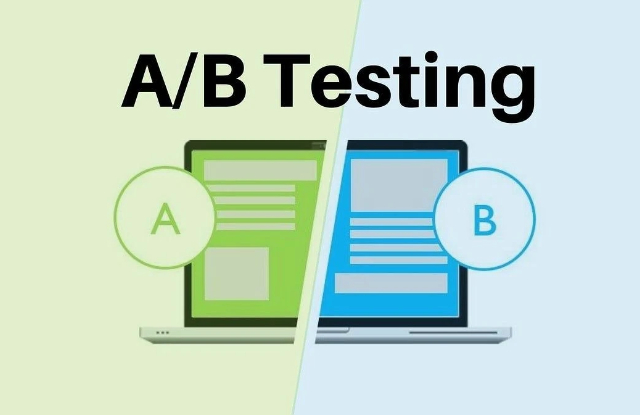
So what is A/B testing, precisely? It’s a controlled experiment that isolates a single variable between two versions of an asset — an ad creative, a landing page headline, an offer structure — so any measurable performance difference can be attributed to that change and nothing else. The discipline is in the isolation. The tooling is secondary.
What is A/B testing? Why is it a strategic imperative for 2026?
The distance between a paid media program that compounds and one that plateaus is almost never budget. It is validation speed. Teams that ship creative on instinct, wait for a monthly report, and then argue about what happened are working with a slower feedback loop than their competitors — and that lag shows up directly in the revenue line.
Companies using A/B testing grow revenue 1.5 to 2 times faster.
So, what is A/B testing in a 2026 context? It is a controlled experiment that splits traffic between two versions of an asset — an ad, a landing page, an offer — where exactly one variable differs, so any performance delta can be attributed to that change and nothing else. The discipline lives in the isolation, not in the tooling.
That definition sounds simple, and the execution is where programs break down. Adobe research indicates market leaders are 2X more likely to update offers in real time, which is the operational signature of a team running a continuous loop rather than quarterly campaign refreshes. Meanwhile, only 52% of marketers finish a complete testing cycle, and the Nielsen Norman Group notes that A/B testing usually identifies small improvements of a few percent, with lucky results reaching 10% or more. Incremental gains, compounded across a full funnel, are the entire mechanism.
Landing page A/B testing is where much of that compounding happens. Ad-side improvements that drive clicks to an unvalidated destination leave conversion potential on the table — and the teams closing that gap are the ones treating page-level experiments as a core input to the same validation system, not a separate CRO project.
Modern Creative Testing: Beyond Standard Ad Sets
Running two ads inside one ad set has never been a clean experiment. Delivery algorithms are optimizers by design: they read the first few hundred impressions, detect a marginal early-click advantage, and reallocate budget toward the leader. The ad that wins is frequently just the ad that got the better first hour. Splitting ads into separate ad sets solves the delivery bias but introduces audience overlap and auction self-competition instead. Understanding how to do A/B testing correctly at the creative level means confronting that structural problem before you touch a single variable. The platform’s delivery mechanics are not neutral — they’re actively working against isolation unless you build the test environment to resist them. Meta’s Creative Testing feature exists to close that gap. It creates a controlled delivery environment for a small, defined set of creatives, holding back the optimization pressure that normally collapses a test before it has gathered meaningful volume. Each asset receives comparable exposure across comparable audience slices, so the readout reflects creative quality rather than algorithmic momentum.
| Standard Ad Set Testing | Creative Testing Feature | |
|---|---|---|
| Budget allocation | Shifts to early leader automatically | Held even across variants |
| Audience handling | Overlap and self-competition risk | Comparable slices per asset |
| Early signal bias | High — first impressions dominate | Suppressed during the test window |
| Best use | Scaling a proven winner | Identifying which creative deserves scale |
| Readout confidence | Confounded by delivery | Attributable to the creative |
The strategic implication matters more than the mechanics. When the platform guarantees fair delivery, creative testing stops being a scaling activity and becomes a research activity. Teams that know how to do A/B testing at this level can deliberately pit opposing concepts against each other — a problem-led hook against an outcome-led hook, static against motion, founder voice against customer voice — and trust that the loser lost on merit. That distinction is what turns a creative library into an evidence base rather than a folder of assets.
Scaling Success with Post ID Preservation
A winning creative carries two assets: the file itself and the social proof attached to it. Likes, comments, shares, and saves accumulate against a single Post ID. Duplicate that ad the normal way into a new campaign and the platform generates a fresh Post ID — the creative survives, the credibility resets to zero. Cold audiences then meet a high-performing ad stripped of every signal that made it persuasive.
Post ID preservation is one of the more underused a/b testing best practices in paid social. Once a controlled test identifies a clear winner, preserving its Post ID keeps all delivery pointed at one canonical post, so engagement pools rather than fragments. Consolidated proof lifts click-through and relevance signals, which typically pulls Cost Per Acquisition down as the campaign scales rather than letting it drift upward. That’s the compounding mechanism — the test produces the winner, and the scaling method protects the evidence that makes the winner work.
Execution in Ads Manager:
Identify the winning creative from your controlled test and locate it in the Page Posts or Ads section.
Copy the Post ID — the numeric string that uniquely identifies that published creative.
- Build the new ad set at the target budget and audience, then create the ad inside it.
- At the ad level, select Use Existing Post instead of Create Ad.
- Paste the Post ID into the field and confirm the preview loads with existing comments and reactions intact.
- Publish, then verify engagement counts continue climbing on the same post across all campaigns using it.
Tip:
Assign one person ownership of comment moderation on preserved posts. A single unanswered objection sitting under an ad running across six campaigns suppresses conversion everywhere at once — and the same leverage works in reverse when responses are fast and specific.
Preservation also simplifies reporting. One post, one engagement history, one credibility asset that strengthens with every dollar of additional spend. In a data orchestration model, that single source of truth feeds back into creative strategy: the engagement patterns on a preserved post — which comments surface, what objections appear, which reactions dominate — become research inputs for the next test cycle, not just metrics to monitor.
Optimizing the Post-Click Experience: Landing Page A/B Testing
Paid media buys attention; the post-click page converts it. Landing page a/b testing is where message match is proven — the continuity between the promise made in the ad and the first line the visitor reads after the click. When those two diverge, no amount of bidding sophistication rescues the campaign.
Headlines and Message Match
The headline is the fastest validation a visitor performs. It should echo the ad’s core promise in the visitor’s own vocabulary, not the brand’s internal positioning language.
- Ad-copy mirror versus brand positioning statement
- Outcome-led framing versus capability-led framing
- Specific segment call-out versus broad category claim
Form Friction and Offer Structure
Form length is a negotiation between lead volume and lead quality. Reducing fields typically raises submissions, but the right test measures downstream qualified pipeline, not raw form fills.
- Seven fields versus three, with enrichment filling the rest
- Single-step form versus multi-step progressive disclosure
- Demo request versus lower-commitment resource offer
Social Proof Placement
Proof works when it appears at the moment of hesitation, which is usually adjacent to the form rather than buried in a lower section.
- Named customer logos versus quantified outcome quotes
- Proof above the fold versus proof beside the CTA
- Industry-matched testimonials versus general brand testimonials
Build and test mobile variants separately. Paid social traffic skews heavily mobile, and a layout optimized for desktop scanning behaves differently on a phone.
What You Need to Know: The A/B Testing Checklist
The operating principles below condense the framework into decisions you can apply to the next experiment on your calendar.
- Hold the line at 95% confidence. A result below that threshold is a hypothesis you have not yet disproven, not a win. Treating directional data as conclusive is how testing programs accumulate changes that quietly cancel each other out.
- On low-traffic B2B sites, test radical changes. Minor tweaks produce effect sizes your sample cannot detect. Restructure the offer, the form, or the page concept — big swings reach significance in weeks instead of quarters.
- Use platform-native split tools for paid social. Running two creatives in one ad set hands the decision to the delivery algorithm, which concentrates budget on an early leader before either variant has been fairly measured. Native experiment tools enforce non-overlapping audiences.
- Split pages, not users, for organic search. SEO group testing assigns comparable templated URLs to control and variant sets, applies a single change to the variant group, and measures the difference against the control baseline — protecting site-wide rankings while the hypothesis is validated.
- Orchestrate across platforms rather than testing in silos. A creative insight validated on TikTok should inform the Google Ads headline and the landing page hero. Treating Google, Meta, TikTok, and the website as one connected experimentation surface is the enterprise standard in 2026.
Run these five checks before launch and the program stops generating opinions and starts generating evidence — the kind that holds up in a budget conversation and compounds across every channel you operate.
The Bottom Line: A/B Testing Best Practices
Knowing how to do A/B testing at scale comes down to a short set of non-negotiables. These are the A/B testing best practices that separate programs producing compounding gains from those producing opinions.
Five rules to operationalize this quarter:
- Test one variable at a time. Two simultaneous changes produce a result with no attributable cause. Isolation is the entire source of a test’s value — without it, you have a performance anecdote, not evidence.
- Prioritize by revenue impact, not implementation ease. A headline swap is fast; an offer restructure is slow and usually worth more. Rank the backlog by expected value against traffic volume, then work top-down.
- Predefine runtime and sample size, then honor them. Set the stopping criteria before launch and treat early results as unreadable. A test killed on day three answers nothing and poisons the next brief with a false conclusion.
- Use platform-native controlled delivery. Standard ad set splits let optimization algorithms pick a winner on early signal noise. Controlled creative testing environments hold budget even across variants so the readout reflects the creative, not the delivery curve.
- Preserve social proof when scaling. Carry the winning Post ID into every new campaign rather than duplicating the creative. Consolidated engagement lowers acquisition cost as spend increases instead of resetting credibility at each scale step.
- Maintain a fixed testing cadence. A permanent slot in the media calendar — one concept test always in flight — keeps the learning loop ahead of audience fatigue and seasonal shifts rather than reacting to them.
Document every outcome, including the losses. A negative result that stops a bad idea from scaling is a budget saved.