Defining Digital Marketing in the 2026 Landscape
Digital marketing has become a major focus for global advertising investment — and understanding what it is has never been more strategically urgent.
At its core, what is digital marketing? It is any marketing effort that uses an electronic device or the internet to connect a brand with its audience. That definition covers a vast and expanding territory: search engine optimization, paid social advertising, email campaigns, content marketing, influencer partnerships, and beyond. Every touchpoint where a consumer and a brand meet through a screen falls under this umbrella.

The shift from traditional media to digital-first communication did not happen overnight, but by 2026 it is effectively complete. Print budgets have significantly decreased. Broadcast dominance has diminished. Audiences now spend the majority of their media time on platforms that are inherently interactive, trackable, and algorithmically driven. Brands that still anchor their growth strategy to offline channels are competing for a shrinking slice of consumer attention.
The numbers clearly illustrate the trend. Digital channels now account for 72.7% of worldwide advertising investment, with online spend exceeding $790 billion in 2024. This is no longer an emerging trend but an established reality. And yet, many brands treat digital marketing as one tactic among many rather than the central engine of growth it has become. Understanding why that gap persists — and what closes it — starts with having a real strategy in place.
The Real Reason Your Brand Needs a Digital Strategy
Most brands recognize that digital marketing matters — but recognition alone does not translate into results; only a documented strategy does.
The gap between awareness and execution is striking. According to Salesforce, 42% of organizations lack a clearly defined digital marketing strategy. That means nearly half of all competing brands are spending budget, publishing content, and running campaigns without a coherent plan guiding any of it. The outcome is predictable: inconsistent messaging, duplicated effort, and channels that work against each other rather than in concert.
Strategy vs. Execution: While 63% of global marketers identify strategic planning as the top factor for campaign success, only 41% of businesses actually operate with a documented digital marketing strategy. The gap between knowing what works and doing it remains one of the most expensive problems in modern marketing.
Without a strategy, budget tends to follow noise rather than opportunity. A brand might invest heavily in paid social one quarter, shift to digital marketing SEO the next, and then pivot again — never allowing any single channel enough time or resource to compound. What typically happens is a fragmented presence that confuses potential customers and exhausts internal teams simultaneously.
Strategic planning closes that gap by giving every channel a defined role, every campaign a measurable objective, and every dollar a rationale. It turns disconnected tactics into a system. And that is precisely what the next section examines — the specific components that belong inside a well-built digital strategy, starting with the channels that drive the most durable, long-term growth.
Core Components: SEO, Content, and Social Discovery
SEO, content marketing, and social discovery each serve distinct functions, but together they form the foundation of a system that compounds over time.
SEO is where long-term organic visibility is built. Unlike paid advertising, which stops producing results the moment the budget runs out, search engine optimization works by earning a position in results pages through relevance, authority, and technical quality. Consistent investment in SEO typically results in a gradual accumulation of visibility across many search queries — visibility that no single ad campaign can replicate as cost-efficiently. It is the infrastructure layer beneath everything else.
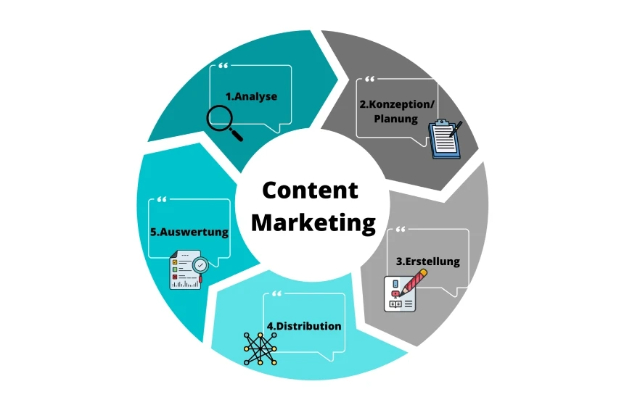
Content marketing is how that SEO infrastructure gets populated with meaning. Every well-researched article, guide, or resource a brand publishes gives search engines something to index and gives potential customers something to trust. For brands just beginning to build a digital presence, content is often the most accessible entry point — it requires no ad spend, and it works by demonstrating expertise rather than simply asserting it. Authority accrues gradually, and that accumulated trust is what converts a first-time visitor into a returning customer.
Social media has undergone a fundamental shift in its role. It is no longer just a place where brands post updates — it has become a primary search and discovery engine in its own right. 75.78% of consumers have used social media platforms to search for or discover new products and brands, and it is the #1 product discovery platform for Gen Z and Millennials. For any brand trying to reach younger audiences, treating social as a secondary channel is no longer a cautious choice — it is a strategic blind spot. Understanding how these three components work together is one thing; knowing who actually manages them day-to-day is another question entirely.
What Do Digital Marketers Actually Do?
Digital marketers are not simply content creators or ad buyers — they are generalists who operate at the intersection of strategy, creativity, and technical execution every single day.
What does the role actually involve? The work spans a surprisingly wide range of disciplines. On any given day, a digital marketer might analyze campaign performance data in the morning, write or edit content for a blog post by midday, and troubleshoot a broken email automation sequence in the afternoon. Modern digital marketers must balance strategic planning with technical execution across multiple channels like email, search, and social media marketing — and that breadth is precisely what makes the role both demanding and durable.
Is the line between inbound marketing and direct advertising still relevant? Very much so. Inbound marketing — the practice of attracting customers through useful content, organic search visibility, and social discovery — operates on a pull model. It draws people toward a brand by answering questions and solving problems before a sale is ever proposed. Direct digital advertising, by contrast, pushes a message toward a defined audience through paid placements. Both approaches live under the same strategic roof, but they require different skills, different timelines, and different success metrics. In practice, the most effective teams treat them as complementary rather than competing.
Is digital marketing a viable career in 2026? The short answer is yes — and the demand is accelerating, not plateauing. As brands pour more budget into owned and paid digital channels, the need for professionals who can navigate SEO, paid media, analytics, and content simultaneously continues to grow. The challenge is that the role evolves quickly; staying relevant means committing to continuous learning rather than coasting on yesterday’s playbook.
Understanding what digital marketers do daily is useful context, but it raises a crucial question: how do you build a strategy that puts all these moving parts to work? That is exactly what the next section breaks down.
How to Build Your First Digital Marketing Strategy
Documenting a strategy is the primary differentiator between successful marketing teams and those that struggle to show ROI — and that single habit separates brands that grow from brands that spin their wheels indefinitely.
Knowing that distinction exists is one thing. Acting on it requires a repeatable process. Here is a straightforward framework for moving from zero to a functioning strategy without getting lost in complexity.
- Define your goals and target audience. Before selecting a single channel or writing a single piece of content, get specific about who you are trying to reach and what you want them to do. A beginner audience unfamiliar with digital tools needs different messaging, different platforms, and different content formats than an experienced buyer actively comparing solutions. Vague goals produce vague results — set objectives that are measurable from day one.
- Audit your existing digital presence and choose your primary channels. Take stock of what you already have: your website, social profiles, email marketing list, and any content assets. Then choose one or two channels where your target audience actually spends time, rather than spreading effort thin across every platform at once. Depth on fewer channels consistently outperforms surface-level activity across many.
- Create a content calendar and document your workflow. This single step is where most beginners avoid the pitfalls that derail the majority of teams. A written calendar removes guesswork, keeps execution consistent, and gives you a reference point for measuring what is working. Without documentation, strategy exists only as good intention — and good intentions do not compound over time.
Building this foundation puts every tactic you have learned so far into a system. And once that system is in place, the natural next question becomes: how do you sharpen the skills needed to run it well?
The Path to Mastery: Digital Marketing Certification Courses
Enrolling in a recognized digital marketing certification course is the fastest way to close the gap between knowing what digital marketing involves and being able to execute it with confidence.
Building a strategy, as covered in the previous section, requires a skill set that does not materialize on its own. Reading blog posts and watching tutorials can introduce concepts, but structured learning through a recognized program forces you to apply those concepts systematically — and gives you credentials that signal competence to employers and clients alike.
Certifications as industry benchmarks. Platforms like Google and HubSpot have set the standard for what foundational digital marketing knowledge looks like. Their programs are widely accepted by hiring managers and are specifically designed to move learners from passive familiarity to active execution. For beginners, this distinction matters enormously. A certification does not just teach you; it validates that you can perform.
The most practical paths for building credible, job-ready skills typically fall into these categories:
- Search and analytics certifications — covering SEO fundamentals, Google Ads, and performance measurement
- Content and inbound marketing certifications — focused on strategy, buyer personas, and conversion
- Social media marketing certifications — addressing platform-specific tactics and paid social fundamentals
- Email and automation certifications — teaching lifecycle marketing and campaign workflows
Each credential builds on the others. And taken together, they map directly onto the day-to-day responsibilities that define the digital marketing role. The final question worth addressing is whether all of this effort — the strategy, the skills, the certifications — actually points toward a clear and defensible conclusion.
What You Need to Know: The Bottom Line
Digital marketing is no longer a supplemental channel — it is the primary arena where global advertising investment is concentrated, consumer decisions are made, and brand presence is either built or lost.
Every section of this guide has pointed toward the same conclusion: fragmented tactics without a system will not move the needle. The brands that grow are the ones that treat digital as a connected discipline — where SEO, content, paid media, and social each serve a defined role inside a documented strategy rather than operating as isolated experiments.
A documented strategy remains the single most critical differentiator. And yet a significant share of organizations still operate without one — which means the opportunity to outperform competitors is available to any team willing to commit their plan to paper before spending a dollar on execution.
Social discovery has fundamentally shifted how younger consumers find brands. Platforms that function as search engines for product research have overtaken traditional query-based search in that demographic, making a strong social presence non-negotiable rather than optional. On the other hand, dismissing traditional search entirely would be a mistake — both channels reward consistent, strategic investment.
Professional certifications remain the most direct path for beginners who want credible, employer-recognized skills without a multi-year detour. The credential gap is real, and closing it in 2026 is more accessible than at any prior point. Start with one channel, earn the certification, and build outward from there. The system this guide has outlined is already in front of you — the only remaining step is to put it in motion.