The State of Social Media Advertising in 2026
Social media advertising has crossed a threshold in 2026 where it is no longer an optional channel — it is the primary engine driving measurable digital growth for businesses of every size.
Global social media advertising spend is projected to reach $338.75 billion in 2026, a figure that signals just how dominant paid social has become in the modern marketing mix. And it is not hard to understand why. 93% of marketers utilize social media in their strategy, making it the most widely adopted channel in digital marketing today.
Paid strategy sits at the heart of this landscape. Social media advertising is, at its core, a paid approach to reaching targeted audiences across platforms where people already spend their time. Unlike organic content — which depends on algorithmic goodwill — paid ads guarantee visibility. In 2026, the shift to a “pay-to-play” model is effectively complete. Organic reach on most major platforms has declined sharply, and brands that rely solely on unpaid posts are operating at a structural disadvantage.
Social media marketing has evolved from a brand-awareness afterthought into a full-funnel performance discipline. Today, paid social drives prospecting, retargeting, direct conversion, and customer retention — often within a single campaign architecture. The $338.75 billion global market reflects that transformation: advertisers are not spending at that scale on awareness alone. They are investing because the data, targeting precision, and measurable return justify it.
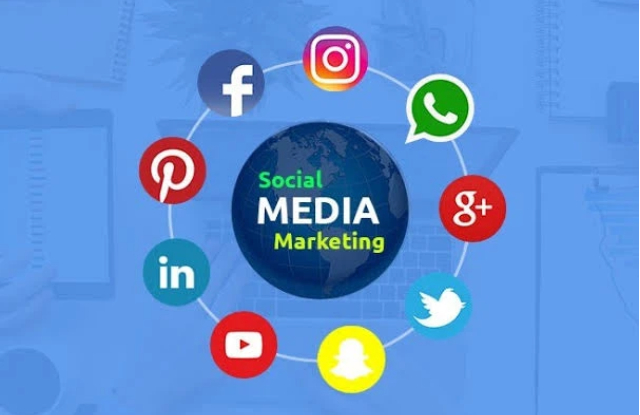
This guide covers everything you need to navigate that landscape with confidence — from foundational vocabulary to advanced campaign structures. Before diving into strategy, though, it pays to understand the language of the discipline. The next section builds out the core terminology every advertiser needs to speak fluently in 2026.
Core Terminology: The 2026 Ad Glossary
Every discipline has its own vocabulary, and fluency in the language of ad social media is the first prerequisite for running campaigns that actually perform.
The terms below are not just definitions — they are operational concepts that shape how platforms allocate budget, how algorithms find your ideal customer, and how you measure whether any of it is working. Understanding them precisely prevents costly misinterpretations.
ROAS (Return on Ad Spend)
A ratio that measures revenue generated for every dollar spent on advertising; calculated by dividing total campaign revenue by total ad spend, expressed as a multiplier (e.g., 4x means $4 earned per $1 spent). ROAS is the primary efficiency signal advertisers use to judge whether a campaign scales or stops.
Pixel / Conversions API Tracking
A technical layer — either a browser-side code snippet or a server-side API connection — that passes user behavior data (page views, add-to-cart events, purchases) from your website back to the ad platform, enabling accurate attribution and audience building. In practice, server-side API tracking has become the preferred method because browser privacy restrictions have reduced pixel reliability.
Lookalike Audience
An algorithmically generated audience segment that a platform constructs by analyzing the shared characteristics of a seed audience (typically your existing customers or site visitors) and then finding new users who match that profile at scale. Lookalikes remain one of the highest-leverage targeting tools available because the algorithm surfaces signals human planners would never isolate manually.
Creative Refresh
The deliberate process of replacing or updating ad creative — images, video, copy, or format — before performance degrades due to audience fatigue, commonly called ad fatigue. A common pattern is to monitor frequency metrics closely; when average frequency climbs above three to four exposures per user, creative refresh becomes urgent rather than optional.
CPM (Cost Per Mille)
The cost an advertiser pays for one thousand impressions of an ad; a foundational pricing metric used across nearly every major platform auction.
CPC (Cost Per Click)
The amount paid each time a user clicks an ad, regardless of what happens after the click; useful for traffic-oriented objectives but less diagnostic than downstream conversion metrics.
Ad Frequency
The average number of times a single user within your target audience sees a given ad over a defined period; high frequency signals audience saturation and often precedes performance decline.
These seven terms form the working vocabulary for everything that follows in this guide. But knowing the terms is only half the equation — knowing how they interact within a single campaign is what separates strategic advertisers from those burning budget reactively. The next section breaks down the five structural elements that every high-performing social ad shares, and how each one connects back to the metrics defined above.
The 5 Essential Elements of a Successful Social Ad
Every high-performing social ad shares five structural components — and a weakness in any single one is enough to drag down an otherwise well-funded campaign.
Understanding the terminology from the previous section only gets you so far. What transforms that vocabulary into actionable strategy is knowing exactly which building blocks your social media ads require before launch. Here is how each element functions in practice.
- Visual Assets — Video and high-res imagery are not interchangeable; they serve different conversion moments. Video tends to work better for awareness and storytelling, while static high-resolution imagery often delivers stronger direct-response results where a single frame must communicate the entire offer. Platforms consistently prioritize visually native content — meaning assets that look organic rather than produced — because those formats earn higher engagement rates from their algorithms.
- Ad Copy — A hook, a value proposition, and a call-to-action must each earn their word count. The hook interrupts the scroll; the value proposition answers “why should I care?”; and the CTA removes friction from the next step. Overloading any single sentence dilutes all three functions simultaneously.
- Targeting Parameters — Demographics tell you who someone is; psychographics tell you what they want. Layering both tends to produce tighter audience segments and reduces wasted impressions. Combining behavioral signals with interest-based targeting is a common pattern among advertisers running efficiently at scale.
- Bidding Strategy — Auction dynamics in 2026 reward relevance as much as spend. Platforms weight ad quality and predicted engagement alongside bid amount, so an underfunded but highly relevant ad can outplace a higher bid with a poor quality score.
- Destination URL — The landing page experience must continue the promise the ad made. A mismatched page — slow to load, off-message, or cluttered — wastes every dollar spent on the click. Message continuity between ad and destination is where conversion rates are frequently won or lost.
Getting these five elements right creates the structural foundation for measurable returns — which is exactly where the next section picks up, examining the specific advantages that make social advertising one of the highest-ROI channels available in 2026.
High-ROI Benefits of Social Advertising
Social network advertising delivers a combination of speed, precision, and revenue potential that few other digital channels can match at comparable budget levels.
The five structural elements covered in the previous section explain how a social ad works. What they do not fully address is why the investment justifies itself so consistently — and the answer comes down to three interlocking advantages that compound across a well-run campaign.
- Immediate scalability that organic channels cannot replicate. Search engine optimization builds authority over months or years. Social advertising, by contrast, puts your message in front of a qualified audience within hours of launching a campaign. You can increase spend on a winning ad set the same day results confirm it is working, or pull back instantly if performance dips. That responsiveness is structurally impossible with organic content, where algorithmic timelines are largely outside your control. For new brands or product launches operating against a deadline, this speed-to-audience advantage is often decisive.
- Granular targeting that shrinks wasted spend. Every major platform allows advertisers to layer behavioral data, interest signals, demographic filters, and custom audience uploads — then refine further using lookalike modeling. In practice, this means your budget reaches people with a demonstrated propensity to buy, rather than a broad population that happens to scroll past. The narrower and more accurate the audience definition, the lower your cost per acquisition tends to be, and the higher each conversion contributes to overall return.
- Revenue potential that reaches exceptional multiples for retail and digital products. Retailers have seen as much as $13 in revenue for every $1 invested in social media advertisements, according to Salesforce. That figure is not universal — results depend heavily on product margins, creative quality, and targeting discipline — but it illustrates the ceiling that becomes accessible when all campaign elements align. For e-commerce operators and digital product sellers specifically, social advertising often produces the highest measurable return of any paid channel in the media mix.
Brand awareness is an additional, often underweighted benefit. For businesses building an online presence from the ground up, consistent ad exposure accelerates the recognition cycle that organic content alone would take far longer to achieve. Paid visibility reinforces content credibility and drives the kind of repeat-exposure lift that converts passive scrollers into buyers over time.
These advantages do not operate in isolation — they stack. Fast scalability multiplied by precise targeting directed at a high-margin product category is where social advertising generates its most dramatic returns. Realizing that potential, though, depends on choosing the right ad format for each objective — which is exactly what the next section maps out across the six dominant ad types in 2026.
The 6 Dominant Ad Types in 2026
Choosing the right format is the single most decisive variable in determining whether your ads for social media drive results or drain budget.
The structural elements and ROI benefits covered in previous sections only materialize when your format matches your objective. Each of the six dominant ad types below serves a distinct purpose — and selecting the wrong one, even with a strong creative and precise targeting, consistently underperforms.
- Image Ads — The natural entry point for any advertiser. Static image ads require the least production overhead, load quickly across all connection speeds, and communicate a single, focused message. They tend to work better for direct-response offers where clarity outweighs complexity, and their simplicity makes split-testing creative variables fast and affordable.
- Video Ads — The highest-attention format in the feed. Video captures motion-triggered attention that static imagery cannot, making it the preferred format for brand storytelling, product demonstrations, and emotional hooks. Shorter cuts — generally under 15 seconds — hold completion rates most reliably, particularly on mobile-first placements.
- Carousel Ads — A scrollable sequence of images or videos within a single ad unit. Carousel ads are well-suited for showcasing product ranges, walking through a step-by-step narrative, or displaying multiple features of a single product. Each card links independently, giving you granular click data by slide position.
- TikTok Spark Ads — A native-content format that amplifies existing organic posts, either your own or a creator’s with permission. Spark Ads preserve the authentic feel of user-generated content while applying paid distribution behind it, which often results in stronger engagement rates than polished brand-produced creative.
- Story and Reel Ads — Full-screen vertical placements that occupy the entire mobile viewport. The immersive format eliminates competing content and is consistently effective for time-sensitive offers, event promotion, and awareness objectives where immediate impact matters most.
- Lead Generation Ads — Platform-native forms that collect user data without redirecting to an external landing page. Because contact fields are pre-populated from the user’s profile, friction is dramatically reduced and completion rates typically outperform off-platform form pages, making this format the most efficient tool for list-building and qualification campaigns.
Format selection is not a one-time decision — it shifts as your objective, audience temperature, and funnel stage change. And critically, not every format performs equally across every platform. That dimension is what the next section addresses directly, mapping each major platform to the budget allocation strategy most likely to deliver returns.
Platform Selection: Where to Spend Your Budget
Not every platform deserves an equal share of your budget — and in social media advertising 2026, the clearest competitive advantage belongs to advertisers who match each platform’s native strengths to a specific business objective.
The format decisions covered in the previous section only generate returns when they are deployed on the right platform. Here is how the four dominant channels compare across the metrics that matter most to budget allocation:
| Platform | Best For | ROI Potential |
|---|---|---|
| Broad audience reach, retargeting, lead gen | High across most verticals | |
| Visual branding, lifestyle, e-commerce | High for product-driven brands | |
| TikTok | Viral reach, Gen Z engagement, awareness | High for entertainment and consumer goods |
| B2B lead generation, professional services | High for high-ticket B2B offers |
Facebook remains the benchmark for measurable returns. Facebook is the top ROI social channel for 70% of marketers, a figure that reflects its unmatched combination of audience scale, targeting granularity, and conversion infrastructure. Its retargeting capabilities and mature pixel ecosystem make it especially effective for direct-response campaigns across nearly every industry vertical.
Instagram tends to work better for brands where visual identity does the selling. Lifestyle products, fashion, food, and WordPress-based content brands all benefit from Instagram’s carousel and Reels formats, where aesthetic continuity between the ad and the brand profile reinforces purchase intent at the moment of discovery.
TikTok leads on organic-feeling reach and dominates Gen Z attention. But it rewards authenticity over polish — ads that mirror native content consistently outperform traditional creative on the platform. Budget allocated here is generally better suited to awareness and top-of-funnel objectives than direct conversion.
LinkedIn is the standard for B2B advertisers targeting decision-makers. Cost-per-click runs higher than other platforms, but the quality of professional targeting — by job title, company size, and industry — often justifies the premium when the offer is a high-ticket service or enterprise solution.
Platform selection is not permanent. As your funnel matures and audience data accumulates, the optimal allocation will shift — and structured testing frameworks can help you identify exactly when and where to redirect spend. Those frameworks are what the next section unpacks.
Demystifying the Rules: 5-5-5 vs. 3-3-3
Three deceptively simple frameworks — the 5-5-5 rule, the 3-3-3 rule, and the 5:3:2 rule — give advertisers a structured way to test, post, and scale without guessing.
Platform selection and budget allocation, as covered in the previous section, tell you where to spend. These frameworks tell you how to structure what you deploy there. Each addresses a different layer of execution, and understanding which one applies to your current problem saves both time and budget.
The 5-5-5 Rule governs campaign architecture at the paid media level. The model calls for running 5 campaigns, each containing 5 ad sets, each containing 5 creatives. The logic is deliberate: broad enough to surface statistically meaningful performance signals, yet contained enough to avoid audience overlap and budget fragmentation. In practice, this structure forces you to isolate variables — one ad set might test audience A, another tests audience B — so that you can read results cleanly rather than attributing performance to the wrong input.
The 3-3-3 Rule operates at the creative level and is designed specifically for messaging tests. You build 3 distinct hooks (the opening frame that stops the scroll), 3 body copy variants, and 3 headline treatments, then run combinations systematically. This is particularly effective for a WordPress blog promotion: test whether a curiosity-driven hook outperforms a stat-led one, or whether a benefit headline beats a question format.
The 5:3:2 Rule applies to your organic content mix alongside paid activity. For every 10 posts: 5 should be curated third-party content relevant to your audience, 3 should be original brand content, and 2 should be conversational or personal. For blog promoters, this ratio prevents the feed from reading as a pure promotional channel, which tends to suppress organic reach and erode audience trust over time.
Applying all three together creates a layered system — architecture, creative variation, and content balance working in concert. The question of how to execute within that system, particularly around mobile-first design and AI-assisted iteration, is precisely what the next section on 2026 best practices addresses.
2026 Best Practices for High-Converting Ads
The highest-performing social ads in 2026 share four operational habits: mobile-first design, systematic A/B testing, native-feeling creative, and AI-assisted iteration.
The frameworks and platform strategies covered earlier in this guide create the architecture for a campaign. But architecture without execution discipline consistently underperforms. These four practices translate structural knowledge into ads that actually convert.
- Mobile-first creative design. The majority of social media consumption happens on mobile devices, which means creative built for desktop and adapted downward routinely loses visual impact. One practical approach is to design every asset at vertical or square dimensions first — 9:16 for Stories and Reels, 1:1 for feed placements — and treat widescreen as the adaptation rather than the origin. Text overlays should be legible at thumb-scroll speed, and any critical message or branding must appear in the first two to three seconds before a viewer can scroll past.
- A/B testing to refine messaging. Testing one variable at a time — headline, image, call to action, or audience segment — produces actionable signal. When multiple elements change simultaneously, you lose the ability to attribute performance to any single factor. A common pattern is to run two creative variants against the same audience for a defined spend threshold, then redirect budget toward the winner before scaling.
- The Spark method for native-feeling ads. On platforms like TikTok, Spark Ads allow brands to boost existing organic creator content rather than producing polished brand-produced spots. The format inherits the authenticity signals of organic content — natural pacing, real comments, genuine creator voice — which tends to suppress the subconscious ad-detection response that causes users to scroll away.
- AI for creative iteration and copy. AI tools now accelerate the production of headline variants, caption rewrites, and visual concept drafts. Rather than replacing creative judgment, they compress the iteration cycle — enabling you to test more combinations inside the same budget window.
These practices compound over time, and they translate directly into stronger landing page performance when your ad traffic is well-qualified. That connection between ad execution and on-site infrastructure — particularly for WordPress publishers — is exactly what the next section unpacks.
Measuring Success: Costs and Strategies
Knowing your numbers is not optional — understanding CPC, CPM, and CPA transforms social media advertising from a cost center into a measurable growth engine.
Cost-per-click (CPC) measures what you pay each time a user clicks your ad, making it the go-to metric for traffic-driven campaigns. Cost-per-thousand-impressions (CPM) is the preferred benchmark for awareness campaigns, where reach matters more than immediate action. Cost-per-acquisition (CPA) is the most accountability-driven metric of the three — it calculates the total spend required to generate one conversion, whether that is a lead, a sale, or a subscriber. According to Channable’s complete guide to social media advertising, aligning your primary metric to your campaign objective — not defaulting to whichever looks most flattering — is one of the clearest separators between disciplined advertisers and those burning budget reactively.
For beginners setting a realistic starting budget, a practical floor is $300–$500 per month per platform tested. That range provides enough data volume to reach statistical significance on basic A/B tests without overcommitting before you understand platform behavior. Start with one objective, one audience segment, and two to three creative variants. Scale only after a metric — typically CPA or return on ad spend — crosses a pre-defined threshold.
Attribution modeling is where many advertisers underinvest. Last-click attribution, the default in most dashboards, systematically overstates the contribution of bottom-funnel touchpoints and undercounts the role awareness ads played earlier in the journey. Multi-touch or data-driven attribution models give a more honest read on which placements are actually driving conversions across a longer path.
Scaling versus killing comes down to one discipline: set kill thresholds before a campaign launches. In practice, an ad that has spent two to three times its target CPA without a single conversion is a data point, not a failure — but continuing to fund it beyond that threshold is. Conversely, an ad hitting CPA targets consistently warrants incremental budget increases of 20–30% every few days rather than aggressive jumps that destabilize the algorithm’s learning phase.
Quick Reference: Common Cost Metrics
| Metric | What It Measures | Best Used For |
|---|---|---|
| CPC | Cost per click | Traffic, lead generation |
| CPM | Cost per 1,000 impressions | Brand awareness, reach |
| CPA | Cost per acquisition/conversion | Sales, sign-ups, ROI tracking |
| ROAS | Revenue generated per $1 spent | E-commerce, direct response |
| CTR | Click-through rate (clicks ÷ impressions) | Creative performance diagnosis |
These metrics do not operate in isolation — CTR informs CPC efficiency, CPC feeds CPA calculations, and CPA anchors ROAS. Reading them as a system, rather than in isolation, is what the best-performing campaigns consistently do. The tactical and strategic lessons from every dimension covered in this guide — from platform selection to attribution — crystallize into a compact set of principles worth carrying forward, which is exactly what the final takeaways section delivers.
Key Takeaways for 2026 Success
Every principle covered in this guide converges on a single operational truth: social media advertising in 2026 rewards structured thinking, platform-specific execution, and disciplined measurement.
The metrics covered in the previous section — CPC, CPM, CPA, and ROAS — are only as useful as the strategy that generates the underlying data. Pulling back from those individual instruments, four principles consistently separate campaigns that compound in value from those that stall or drain budget.
- Organic reach alone is no longer sufficient. Algorithmic compression across every major platform means that even well-crafted content reaches a fraction of potential audiences without paid amplification. Social advertising closes that gap by guaranteeing distribution to precisely defined segments — and it scales in ways that organic channels structurally cannot.
- Platform selection is a strategic decision, not a default. Facebook continues to deliver some of the strongest measured returns for direct-response campaigns, particularly for audiences in the 30-and-above demographic. TikTok, on the other hand, is the clearest growth engine in 2026 for brands targeting younger consumers, with short-form video creating a discovery surface that paid amplification can accelerate dramatically. The right platform depends on your offer, your audience, and your funnel stage — and that calculus deserves deliberate attention.
- Frameworks reduce expensive trial and error. Structured approaches like the 5-5-5 rule give beginners a disciplined entry point by forcing systematic testing of audiences, creative, and copy before budget scales. Without that structure, early campaigns tend to optimize for the wrong signal — or produce no usable data at all.
- WordPress infrastructure determines whether ad spend converts. Pixel integration, fast-loading landing pages, and properly configured tracking are not optional enhancements — they are the foundation on which conversion data is built and retargeting audiences are seeded.
These four principles are not sequential steps. They operate in parallel, reinforcing one another across every campaign cycle. And they raise practical questions that new and experienced advertisers alike return to repeatedly — exactly the kind of questions the next section answers directly.
Frequently Asked Questions & Further Reading
Social media advertising rewards action over preparation — the most common questions beginners ask have practical answers that remove the barriers to starting.
How much should a beginner spend on social ads?
There is no universal minimum, but a structured starting point tends to work better than a large, unfocused launch budget. Most platforms allow daily budgets as low as $5 to $10, which is sufficient to gather early signal on creative performance and audience response. A practical approach is to commit a fixed monthly test budget — often $300 to $500 — spread across two or three ad sets, evaluate what the data shows after two full weeks, and then scale only the combinations that demonstrate measurable traction. Spending more before that signal exists accelerates loss, not learning.
Do I need a large following to start advertising?
No. Paid social operates independently of your organic follower count. Ad platforms deliver your content to targeted audiences based on behavioral and demographic parameters — your page’s existing audience size is largely irrelevant to reach. What matters is the clarity of your targeting, the quality of your creative, and the relevance of your landing page. A brand-new account with zero followers can run a profitable campaign on day one, provided those three elements are well-configured.
What is the best platform for B2B versus B2C?
LinkedIn tends to outperform for B2B objectives — particularly lead generation and enterprise awareness — because its targeting is built around professional identity: job title, company size, and industry. For B2C, Meta and TikTok consistently deliver broader reach at lower cost-per-impression, with strong purchase intent signals among consumer audiences. The right answer, however, depends on your product margin and customer lifetime value, not the platform’s reputation alone.